
.svg)
.svg)


.png)

Dental implants offer a permanent solution for tooth loss, but not everyone qualifies right away. So, what disqualifies you from dental implants?
Most disqualifications from dental implants are temporary and can be fixed with proper treatment, including issues like gum disease, insufficient bone density, uncontrolled diabetes, and smoking.
You might feel discouraged if a dentist has told you that you're not a candidate for implants. The good news is that many disqualifications are situational, not permanent. With the right preparatory steps, most people can become eligible for this effective tooth replacement option and restore their smile.
Understanding what might prevent you from getting dental implants helps you take the right steps to fix these issues. This guide explains common barriers to implant eligibility and shows you practical ways to overcome them so you can move forward with confidence.
Key Takeaways
- Most factors that disqualify you from dental implants can be treated or managed before your procedure
- Addressing issues like bone loss, gum disease, and lifestyle habits can make you eligible for implants over time
- Alternative tooth replacement options exist if dental implants aren't right for your situation
Fundamental Criteria for Implant Eligibility
Getting dental implants requires meeting specific health standards related to your jaw, gums, and overall oral condition. Your dentist will evaluate bone quality, tissue health, and your ability to maintain proper care before recommending treatment.
Determining Implant Candidacy
Your dentist will conduct a thorough evaluation to assess your dental implant candidacy. This process typically includes diagnostic imaging like 3D scans to examine your jawbone structure and identify any potential complications.
During the consultation, your provider will review your complete medical history. They'll look at current medications, past surgeries, and existing health conditions that might affect healing. Your dentist will also check for active infections in your mouth and assess whether you have any untreated dental issues.
Basic requirements for implant eligibility include:
- Good overall health to undergo minor oral surgery
- Commitment to following post-procedure care instructions
- No active infections in the mouth
- Stable health conditions if you have chronic diseases
- Willingness to maintain regular dental visits
The evaluation helps determine if you can proceed immediately or need preparatory treatments first.
Importance of Jawbone Density
Your jaw needs adequate bone volume to support the titanium implant post. The implant must integrate with your bone tissue to create a stable foundation for the replacement tooth.
Bone loss can occur after tooth extraction or from long-term missing teeth. Your jawbone naturally shrinks when it's not stimulated by tooth roots. Severe bone loss may initially prevent implant placement, but procedures like bone grafting can rebuild the necessary structure.
Your dentist uses imaging to measure bone height, width, and density. They also check the proximity to important structures like nerves and sinuses. If you don't have enough bone right now, you may still become eligible after regenerative procedures that take several months to heal.
Role of Gum Health and Oral Hygiene

Healthy gums are essential for successful implant placement and long-term stability. Active periodontal disease must be treated before you can receive implants because infection threatens the integration process.
Your oral hygiene habits directly impact implant success. You need to demonstrate the ability to keep your teeth and gums clean through proper brushing and flossing. Poor oral care increases the risk of peri-implantitis, an infection that can cause implant failure.
Dentists look for signs of gum inflammation, bleeding, or recession during your evaluation. If you have gum disease, your provider will recommend treatment to stabilize your periodontal health first. Once your gums are healthy and you've established good cleaning habits, you can move forward with implant treatment.
Medical and Lifestyle Barriers to Dental Implants
Certain health conditions and daily habits can significantly affect your ability to heal after implant surgery. Managing chronic diseases, quitting tobacco, and reviewing your medications with your doctor are critical steps before pursuing implants.
Uncontrolled Diabetes and Systemic Conditions
If you have diabetes that isn't well-managed, you face a higher risk of implant failure. High blood sugar levels slow down healing and make infections more likely after surgery. Your body needs stable glucose levels to build bone around the implant properly.
Conditions like uncontrolled diabetes or heart disease may affect your eligibility for dental implants. However, well-controlled diabetes doesn't automatically disqualify you. Work with your doctor to get your A1C levels into a healthy range before scheduling implant surgery.
Autoimmune diseases can also create challenges. Conditions like lupus or rheumatoid arthritis affect how your immune system responds to surgery. These diseases may slow healing or reduce implant stability over time. Your dentist will need to review your specific condition and treatment plan to determine if implants are safe for you.
Smoking and Poor Lifestyle Habits
Smoking is one of the most common reasons people experience implant problems. Tobacco restricts blood flow to your gums and jaw, which makes healing much harder. Smokers have significantly higher rates of implant failure compared to non-smokers.
Smoking is among the most common modifiable factors that can affect your dental implant success. You'll need to quit smoking before surgery and stay tobacco-free during recovery. Most dentists recommend quitting at least several weeks before the procedure.
Poor oral hygiene also threatens implant success. If you have active gum disease or don't brush and floss regularly, bacteria can attack the implant site. Maintaining excellent oral hygiene habits is essential both before and after getting implants.
Medications Impacting Healing
Certain medications interfere with bone healing and integration. Bisphosphonates, commonly prescribed for osteoporosis, can affect how your jawbone responds to implants. These drugs may increase the risk of bone death in the jaw, though this complication is rare.
Blood thinners, immunosuppressive drugs, and corticosteroids can also create issues. Blood thinners may need temporary adjustment around your surgery date. Immunosuppressive medications slow down your body's ability to heal and fight infection.
Talk to both your dentist and primary care doctor about all medications you take. They may adjust dosages or timing to improve your chances of successful healing. Never stop taking prescribed medications without medical supervision.
Oral Health Challenges and Treatable Barriers
Several oral health conditions can temporarily prevent you from getting dental implants, but most can be treated before your procedure. Active gum disease and insufficient jawbone are the most common barriers, along with teeth grinding that could damage new implants.
Periodontal Disease and Gum Issues
You cannot get dental implants if you have active periodontal disease or untreated gum issues. The infection weakens your gums and bone, creating an unstable foundation for implants.
Active gum disease leads to:
- Inflammation that prevents proper healing
- Increased risk of peri-implantitis (infection around the implant)
- Lower success rates for implant integration
- Potential implant failure within the first year
Your dentist will treat the infection before moving forward with implants. Scaling and root planing removes bacteria and tartar from below your gum line. This deep cleaning allows your gums to heal and reattach to your teeth.
Most patients need 3-6 months of healing after gum disease treatment. Your dentist will check that your gums are healthy and infection-free before scheduling your implant surgery.
Addressing Bone Loss and Atrophy
Your jawbone must be thick and strong enough to hold an implant securely. Bone loss from missing teeth or gum disease can disqualify you temporarily.
When you lose a tooth, your jawbone starts to shrink. This process speeds up if the missing tooth isn't replaced quickly. Severe bone loss means there isn't enough support for implant stability.
Bone grafting rebuilds your jaw to the proper thickness and density. Your oral surgeon takes bone material (from your body, a donor, or synthetic sources) and places it where you need more support. The graft fuses with your existing bone over several months.
You'll typically wait 4-6 months after bone grafting before getting your implant. A sinus lift may be needed for upper back teeth if your sinus cavity is too close to where the implant will go.
Bruxism and Excessive Bite Forces

Teeth grinding (bruxism) can damage dental implants through constant pressure and force. The excessive grinding wears down both natural teeth and dental work.
Uncontrolled bruxism risks:
- Cracked or fractured implant crowns
- Loosened implant posts
- Bone loss around the implant site
- Complete implant failure
You're not permanently disqualified if you grind your teeth. Your dentist will have you wear a custom night guard to protect your implants while you sleep. This guard absorbs the grinding forces instead of your implants taking the damage.
Some patients also benefit from stress management techniques or medication adjustments if anxiety causes their grinding. Your dentist must confirm you're consistently using your night guard before proceeding with implants.
Preparatory and Staged Solutions for Ineligible Patients
Many patients who don't initially qualify for dental implants can become candidates through preparatory procedures. Bone grafting and sinus lifts address structural limitations, while staged treatment allows time for healing and preparation between steps.
Bone Grafting to Enhance Implant Support
Bone grafting adds bone material to areas where your jawbone density has decreased over time. When you lose a tooth, the surrounding bone often shrinks because it no longer receives stimulation from the tooth root. This process makes it difficult to place an implant securely.
During a bone graft procedure, your dentist places bone material in the deficient area. This material can come from your own body, a donor source, or synthetic options. The graft serves as a scaffold that encourages your natural bone to grow and fill in the space.
Common bone grafting types include:
- Socket preservation grafts placed immediately after tooth extraction
- Ridge augmentation to widen or heighten the jawbone
- Block bone grafts for more severe bone loss
The healing period typically takes three to six months. During this time, the graft integrates with your existing bone and creates a stable foundation. Once healed, your jawbone density should be sufficient to support an implant.
Sinus Lift Procedures
A sinus lift procedure becomes necessary when you need implants in your upper back jaw but don't have enough bone height. Your sinuses sit just above this area, and if the bone is too thin, an implant could penetrate the sinus cavity.
The sinus lift procedure involves gently lifting the sinus membrane and placing bone graft material beneath it. This creates additional height between your sinus floor and the ridge of your jaw.
There are two main approaches. A lateral window technique works for areas with significant bone loss. A crestal approach may work if you only need a small amount of additional height and can sometimes be done at the same time as implant placement.
Most sinus lifts require four to nine months of healing before implants can be placed. The bone graft must fully integrate to provide adequate support.
Staged Treatment Approaches
Staged treatment means breaking your implant process into separate phases with healing time between each step. This approach helps patients who need multiple preparatory treatments before they can receive implants.
Your first stage might involve treating gum disease or performing extractions. The second stage could include bone grafting or a sinus lift. Only after these areas heal would you move to the implant placement stage.
A typical staged timeline might look like:
- Months 1-3: Gum disease treatment and oral health improvement
- Months 4-9: Bone grafting with healing period
- Months 10-12: Implant placement
- Months 13-16: Final restoration attachment
While staged treatment takes longer than immediate placement, it significantly improves your chances of long-term success. Each phase allows your body to heal properly before adding the next component. This method also lets you address health issues like uncontrolled diabetes or smoking cessation between stages.
Alternatives and Restorative Options When Implants Are Not Possible
When dental implants aren't an option for you, several effective tooth replacement solutions can restore your smile and chewing function. Each alternative has specific benefits depending on how many teeth you're missing and your oral health situation.
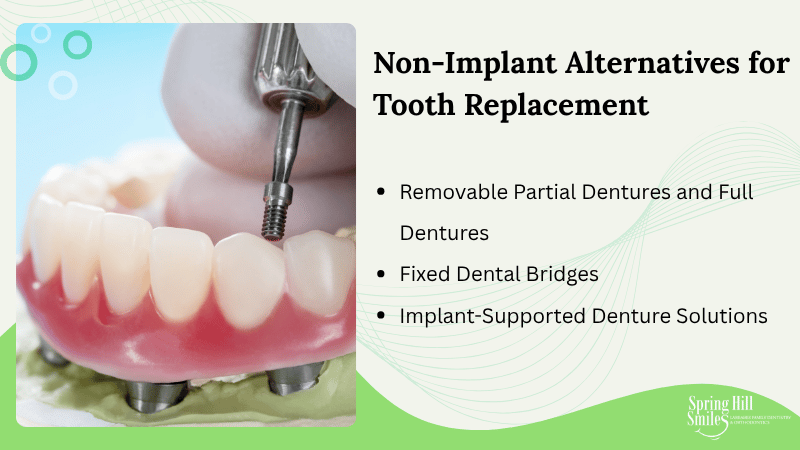
Removable Partial Dentures and Full Dentures
Removable partial dentures replace one or more missing teeth by attaching to your remaining natural teeth with metal clasps or precision attachments. These appliances consist of replacement teeth attached to a gum-colored plastic base.
You can take them out for cleaning and sleeping. They're typically the most affordable tooth replacement option and don't require surgery.
Full dentures replace all your teeth in the upper or lower jaw. They rest directly on your gums and stay in place through suction or denture adhesive.
Your dentist will need to take impressions of your mouth to create custom-fitted dentures. While they take some time to get used to, modern dentures look natural and restore basic chewing ability. You'll need to remove and clean them daily and may need adjustments over time as your jaw bone changes shape.
Fixed Dental Bridges
A dental bridge anchors an artificial tooth to the natural teeth on either side of the gap. Your dentist prepares the adjacent teeth by removing some enamel to place crowns over them.
The replacement tooth sits between these crowns, creating a permanent restoration you can't remove. Fixed dental bridges typically last 10 to 15 years with proper care.
They work best when you have strong, healthy teeth on both sides of the missing tooth. You brush and floss a bridge like natural teeth, though you'll need special floss threaders to clean underneath. Bridges restore your chewing function well and look very natural, but they do require altering healthy teeth for support.
Implant-Supported Denture Solutions
Implant-supported dentures combine the benefits of both dental implants and dentures. Four to six implants are placed in your jaw to anchor a full denture securely in place.
This option works well if you don't have enough bone for individual implants but can support a few strategically placed ones. The denture snaps onto the implants, providing much better stability than traditional dentures.
You can often remove them for cleaning, or your dentist may create a fixed version. They prevent the bone loss that occurs with regular dentures and give you stronger biting force. While more expensive than traditional dentures, implant-supported dentures cost less than replacing every tooth with individual implants.
Frequently Asked Questions
Most disqualifications for dental implants are temporary and can be fixed with the right treatment plan. The questions below address the most common concerns about health conditions, bone loss, smoking, complications, alternatives, and insurance coverage.
What health conditions can make dental implants unsafe, and can they be managed first?
Uncontrolled diabetes with an A1C above 8.0 makes implants unsafe because high blood sugar levels slow down bone healing. If you work with your doctor to get your A1C below 7.0 and keep it stable for three to six months, your success rates become similar to people without diabetes.
Active gum disease creates an unsafe environment for implants. The same bacteria that damaged your natural teeth will attack the bone around an implant. You need to complete periodontal treatment and maintain healthy gums for three to six months before getting implants.
Autoimmune diseases and blood clotting disorders can affect healing and increase failure risk. Your dentist needs to review your specific condition and medications with your doctor to determine if implants are safe for you.
High-dose IV bisphosphonates used for severe osteoporosis or cancer treatment can cause serious jaw problems. If you take these medications, your dentist and doctor need to evaluate your individual risk before moving forward.
How much jawbone loss is too much for implants, and what are the options if there isn't enough bone?
Your jawbone needs enough height, width, and density to hold an implant securely. Dentists use 3D imaging to measure your exact bone dimensions and determine if you have sufficient bone.
Insufficient jawbone causes about 40% of all implant disqualifications at the first visit. The good news is that bone grafting can rebuild lost bone in four to nine months. About 30% of implant patients need some type of bone grafting before getting their implants.
If you've had missing teeth for years, your jawbone has likely shrunk through a process called resorption. Bone grafting adds new bone material to the area, which your body then integrates over several months.
Some patients need sinus lifts if they're getting upper back tooth implants and the sinus cavity sits too low. This procedure raises the sinus floor and adds bone underneath to create enough space for the implant.
Can smokers get dental implants, and what changes improve the chances of success?
Heavy smoking (10 or more cigarettes per day) cuts implant success rates by about 50%. Nicotine restricts blood flow to your gums and bone, which slows healing after surgery.
You don't have to quit smoking forever, but you do need to quit or cut back significantly around the time of surgery. Reducing to fewer than five cigarettes per day for four weeks before surgery and eight weeks after brings your success rates close to normal.
If you can't quit completely, being honest with your dentist helps them plan the best approach. Some dentists use longer healing periods or additional preventive measures for smokers to improve outcomes.
Vaping and smokeless tobacco also affect healing, though research on their exact impact is still developing. Talk to your dentist about any nicotine products you use.
Why do some people have implant complications or regret their implants, and how can those risks be reduced?
Most implant complications happen when patients skip important steps in the screening process or don't follow post-surgery instructions. The most common problems include infection, implant failure, nerve damage, and sinus issues.
Choosing an experienced implant dentist who uses 3D imaging and proper planning reduces most risks. Dentists who place implants regularly have lower complication rates than those who only do a few per year.
Following all pre-surgery and post-surgery instructions dramatically improves your outcome. This includes taking prescribed medications, avoiding smoking, eating soft foods during healing, and attending all follow-up appointments.
Some people regret implants because they had unrealistic expectations about healing time, cost, or final appearance. A thorough consultation where you ask questions and understand the full process helps prevent this regret.
Infections usually occur when patients don't maintain good oral hygiene or have untreated gum disease. Brushing, flossing, and regular dental cleanings protect your implant just like they protect natural teeth.
What are the best alternatives if I'm not a good candidate for dental implants right now?
Dental bridges attach to your natural teeth on either side of the gap and don't require surgery or sufficient bone. They work well for one to three missing teeth in a row and can last 10 to 15 years with good care.
Partial dentures are removable appliances that replace multiple missing teeth. They're less expensive than implants and don't require surgery, but they can feel bulky and may affect how you taste food.
Complete dentures replace all teeth in your upper or lower jaw. Traditional dentures rest on your gums, while implant-supported dentures attach to a few implants for better stability without needing as much bone as individual implants.
Mini implants are smaller than regular implants and need less bone, making them an option for some patients who don't qualify for standard implants. They're often used to stabilize lower dentures but may not work for single tooth replacement.
Resin-bonded bridges (Maryland bridges) attach to the back of neighboring teeth with minimal tooth preparation. They work best for front teeth that don't handle heavy chewing forces.
Will medical or dental insurance cover implants, and how can I improve the odds of getting coverage?
Most dental insurance plans don't cover implants because they classify them as cosmetic procedures. Some plans cover part of the cost, usually the crown portion, but not the implant post or surgery.
Medical insurance sometimes covers implants if tooth loss resulted from an accident, cancer treatment, or congenital condition. You need documentation from your doctor explaining the medical necessity.
Getting pre-authorization before your procedure helps you know exactly what your insurance will pay. Submit detailed records including X-rays, treatment plans, and medical history to strengthen your case.
Flexible spending accounts (FSAs) and health savings accounts (HSAs) let you use pre-tax dollars for implants. This saves you money even when insurance doesn't cover the procedure.
.png)
.png)





.svg)
.webp)