
.svg)
.svg)


.png)

A strong gag reflex can make even a simple dental visit feel stressful. You may worry about choking, gagging, or not being able to sit through treatment. That fear alone can keep you from getting the care you need.
IV sedation helps control your gag reflex by relaxing your body and calming your throat muscles, so you can stay comfortable during dental procedures. With IV sedation, you stay deeply relaxed while your dentist works safely and efficiently. Many people who struggle in the chair find they can finally complete treatment without constant discomfort.
If you avoid appointments because of gagging or anxiety, sedation dentistry may change your experience. When you understand how IV sedation works and what to expect, you can plan a more comfortable dental visit with confidence.
Key Takeaways
- IV sedation relaxes your body and reduces your gag reflex during treatment.
- Sedation dentistry helps you complete dental care more comfortably.
- Proper planning can make your next dental visit calm and manageable.
Understanding the Gag Reflex in Dental Settings
Your gag reflex protects you from choking, but it can make dental care hard. When this reflex becomes too sensitive, even simple tools can feel overwhelming.
What Causes a Sensitive Gag Reflex
Your gag reflex starts in the back of your mouth and throat. Nerves in this area send signals to your brain when something touches them.
If you have a sensitive gag reflex or hypersensitive gag reflex, these nerves react too fast or too strongly.
Several factors can increase gag reflex sensitivity:
- A narrow airway
- Postnasal drip or sinus problems
- Acid reflux
- Enlarged tonsils
- Past choking experiences
Your emotions also play a role. Stress tightens your throat muscles. When you feel nervous, your body stays on alert, which makes gag reflex control harder.
Some people simply have a stronger reflex by nature. Others develop it over time after a bad dental visit. Either way, the reaction feels real and physical, not imagined.
Common Triggers During Dental Procedures
Many gag reflex triggers happen during routine care. Even a dental mirror touching the back teeth can cause a reaction.
Common triggers at the dentist include:
- X-ray sensors placed near the molars
- Dental impressions or molds
- Water pooling in the mouth
- Suction tips near the throat
- Long procedures that require you to keep your mouth open
A strong gag reflex can also react to smells or tastes. The scent of dental materials or the feeling of gloves can set it off.
If you breathe through your mouth instead of your nose, you may feel like you cannot catch your breath. That sensation alone can trigger gagging.
Many patients with a gag reflex at the dentist delay treatment because these triggers feel impossible to manage. Some avoid care until pain forces them to come in.
The Impact of Dental Anxiety and Phobia
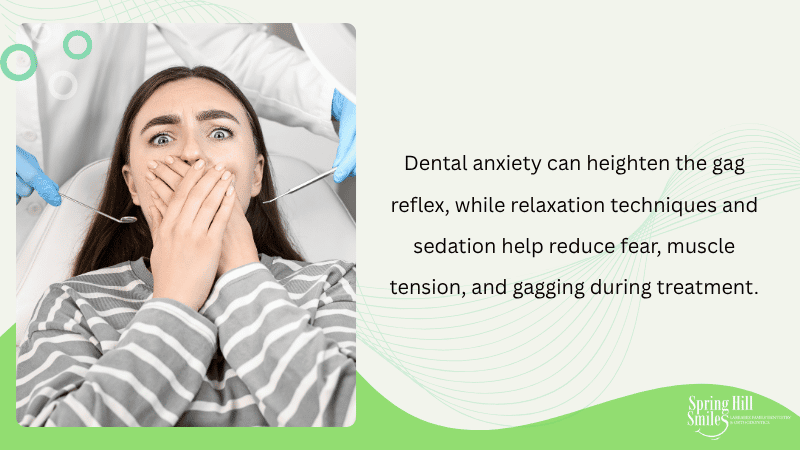
Your mind and body work together during dental visits. If you feel dental anxiety, your heart rate rises and your muscles tighten.
That tension increases gag reflex sensitivity. You may start to gag even before the dentist begins.
If you have a dental phobia, the reaction can be stronger. Fear can cause shallow breathing, sweating, and panic. These symptoms make gag reflex control harder.
Research and clinical experience show that relaxation methods and sedation help reduce this response.
IV options can go further by helping suppress the reflex during treatment. When you reduce fear, you often reduce gagging too.
Challenges Patients Face With Gag Reflex During Treatment
A strong gag reflex can disrupt even simple dental care. It can affect basic exams, imaging, and longer procedures, while also raising stress and dental anxiety.
Dental Impressions and X-Rays
You may struggle most during dental impressions and dental x-rays. These steps place trays, film holders, or digital sensors deep in your mouth, which often trigger the gag reflex.
Impression trays press against the soft palate and tongue. This pressure can cause sudden retching before the material sets. When that happens, your dentist may need to repeat the impression, which adds time and frustration.
X-rays can feel just as hard. Small sensors or tabs rest near the back teeth and throat. Even simple bitewing images may trigger discomfort if you already have a sensitive gag reflex.
The gag reflex is a normal protective response, but when it becomes too sensitive, it can interfere with care. A review on the management of gagging in dental patients explains that gagging can make treatment difficult or even impossible without extra support.
You may start to tense your tongue or pull away without meaning to. That reaction makes routine records harder to complete.
Obstacles to Complex Dental Treatment
Complex dental treatment often requires longer appointments and more tools in your mouth. This increases gag reflex triggers.
Procedures such as crowns, root canals, or extractions may involve suction tips, mirrors, drills, and gauze placed near the throat. Even light contact can set off gagging. When you cannot tolerate these tools, your dentist may need to stop and restart.
If you need multiple treatments in one visit, the challenge grows. Longer chair time means more chances for your gag reflex at the dentist to activate.
Dental teams recognize this issue. Ssevere gag reflexes can limit the use of standard equipment and may require sedation for lengthy care.
You might delay treatment because you fear you will not get through it. That delay can allow small problems to become larger ones.
Psychological and Emotional Barriers
Your gag reflex does not only affect your body. It also affects your thoughts and emotions.
If you have gagged before at the dentist, you may expect it to happen again. That expectation increases dental anxiety. Anxiety can make your muscles tighter and your breathing shallow, which can worsen gag reflex triggers.
Research has explored the link between dental anxiety and hypersensitive gag reflex, showing that these issues often occur together. When anxiety rises, your tolerance for dental tools may drop.
You may feel embarrassed or worry that you are making the visit harder for the dental team. These feelings can stop you from speaking up about your discomfort.
Over time, you might avoid appointments altogether. That cycle can lead to untreated dental problems and more complex dental treatment later on.
How IV Sedation Controls the Gag Reflex
IV sedation relaxes your body and reduces the reflex that triggers gagging. It also lowers anxiety, which often makes the gag reflex worse during dental care.
Mechanism of Action: How Sedation Suppresses Gagging
Your gag reflex protects your airway. It tightens the muscles in the back of your throat when something touches that area.
When you receive intravenous sedation, the medication enters your bloodstream through a small IV line. It works on your central nervous system and slows your body’s stress response. As your muscles relax, the throat becomes less reactive.
Anxiety often makes gagging stronger. If you feel nervous, your body stays tense and alert. IV sedation reduces that tension and helps you stay calm.
During the IV sedation process, your dentist adjusts the dose to keep you deeply relaxed but still able to respond. This level of relaxation, often called twilight sleep, lowers the urge to gag while your dentist works on back teeth, takes X-rays, or places dental tools near your throat.
Benefits of Twilight Sleep and Intravenous Sedation
With twilight sleep, you stay conscious but feel very relaxed and drowsy. You may not remember much of the visit.
This state helps control gagging in three main ways:
- Relaxes throat muscles
- Reduces anxiety triggers
- Limits memory of discomfort
Because IV sedation dentistry works quickly, your dentist can begin treatment within minutes. The medication can also be adjusted during the visit, which gives more control than oral sedation.
Compared to general anesthesia, recovery is usually faster. Many practices note that IV sedation can effectively suppress the gag reflex during complex care, such as oral surgery or long procedures.
You will still need someone to drive you home, but most people rest for the day and resume normal activity soon after.
Medications Used: Midazolam, Benzodiazepine, Diazepam
Dentists often use midazolam, a short-acting benzodiazepine, for IV sedation. It helps you relax, reduces anxiety, and causes temporary memory loss of the procedure.
Benzodiazepines calm the brain by enhancing a natural chemical called GABA. This effect lowers muscle tension and decreases the gag response. Your breathing and heart rate are monitored throughout the visit to keep you safe.
In some sedation options, a dentist may use diazepam as oral sedation before the appointment. Oral medication can help mild cases, but IV sedation allows better control for strong gag reflex issues.
Clinics that focus on IV sedation for patients with a strong gag reflex often recommend intravenous medication when simple relaxation methods do not work. This approach gives you steady, predictable relief from gagging during treatment.
Comparing Sedation Dentistry Options for Gag Reflex
Different sedation options reduce your gag reflex in different ways. The right choice depends on how strong your reflex is, how long your procedure will take, and how much control your sedation dentist needs during treatment.
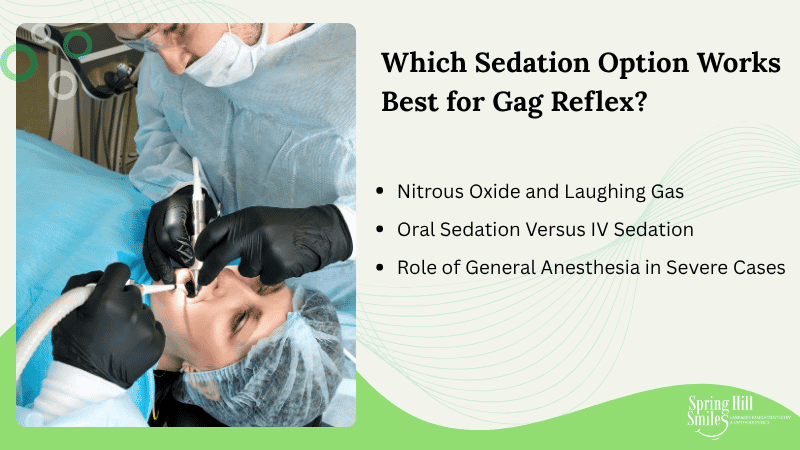
Nitrous Oxide and Laughing Gas
Nitrous oxide, often called laughing gas, is the lightest form of dental sedation. You breathe it through a small nose mask during your procedure.
It helps you feel calm and reduces mild gag reflex triggers. You stay awake and can respond to instructions. Your dentist adjusts the level during treatment, and the effects wear off within minutes after the mask comes off.
This option works best if your gag reflex is triggered by anxiety rather than strong physical sensitivity. It may not be strong enough if you gag during X-rays, impressions, or when tools touch the back of your mouth.
Many patients like nitrous oxide because:
- It works quickly
- It leaves your system fast
- You can usually drive yourself home
If your gag reflex is moderate to severe, you may need a deeper level of sedation.
Oral Sedation Versus IV Sedation
Oral sedation involves taking a prescribed pill before your appointment. It makes you drowsy and relaxed by the time treatment begins.
You remain awake, but you may feel sleepy and less aware of what is happening. Oral sedation can reduce gagging caused by fear or tension. However, your sedation dentist cannot adjust the dose once you take the medication.
IV sedation works differently. A small IV line goes into your arm, and medication flows directly into your bloodstream. It works within minutes and allows your dentist to adjust the level throughout the procedure.
IV sedation is often better for patients with a strong gag reflex or moderate to severe anxiety.
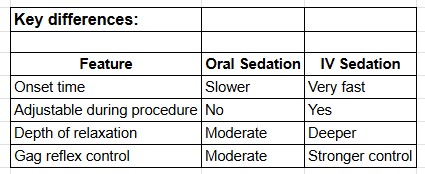
If your gag reflex interferes with treatment, IV sedation often gives your dentist better control and gives you deeper relaxation.
Role of General Anesthesia in Severe Cases
General anesthesia puts you fully asleep. You do not respond to touch or verbal cues.
Dentists usually reserve it for severe cases. This includes patients who cannot tolerate dental tools at all or who have extreme gag reflexes combined with high anxiety.
Unlike IV sedation, general anesthesia requires more monitoring and often takes place in a surgical setting. Recovery also takes longer, and you will need someone to drive you home.
Most patients with a strong gag reflex do not need general anesthesia. A skilled sedation dentist can often manage your reflex safely with IV sedation or another conscious sedation option.
Your dentist will review your health history and the type of procedure you need before recommending this level of care.
Preparing for a Comfortable Dental Visit With IV Sedation
You can take clear steps to make your appointment smooth and low stress. When you understand the IV sedation process, safety steps, and how to choose the right sedation dentist, you feel more in control.
What to Expect Before, During, and After the Procedure
Before your visit, your sedation dentist reviews your health history, current medications, and allergies. You may need to avoid food and drinks for several hours. Your office will give you exact instructions, so follow them closely.
On the day of your appointment, the team places a small IV line in your arm or hand. The medication works quickly. Many patients who choose IV sedation dentistry for dental anxiety report deep relaxation and little memory of the procedure.
During treatment, you stay calm and less aware of triggers that cause a gag reflex. This makes iv sedation for gag reflex helpful for longer or complex care.
Afterward, you rest in the office until you feel more alert. You must arrange a ride home. Plan to relax for the rest of the day.
Safety Measures and Monitoring in Sedation Dentistry

Safety plays a key role in sedation dentistry. Your dental team checks your vital signs the entire time.
They monitor your:
- Heart rate
- Blood pressure
- Oxygen level
Clinics that follow strict sedation protocols explain how they match sedation type to your health history and procedure. This careful approach supports safe and comfortable dental visits.
The dentist adjusts the medication as needed during the procedure. Emergency equipment and trained staff stay on hand. These steps lower risk and help you feel secure while receiving sedation for gag reflex concerns.
Selecting a Sedation Dentist
Choosing the right sedation dentist makes a big difference. Look for a provider with specific training in IV sedation and experience treating patients with a strong gag reflex.
Ask clear questions such as:
- How often do you perform IV sedation?
- What training do you have in sedation dentistry?
- How do you handle emergencies?
Many practices explain who benefits most from IV sedation, including patients with severe anxiety or sensitive gag reflexes.
When you choose a dentist who listens and explains each step, you set yourself up for a more comfortable dental visit and better control over your gag reflex during care.
Frequently Asked Questions
IV sedation can make dental care possible if you struggle with gagging. Clear safety rules and simple tools can also help you stay more comfortable during treatment.
Can IV sedation help reduce a strong gag reflex during dental work?
Yes. IV sedation helps you relax deeply, which can reduce the urge to gag during treatment.
Many dentists use it for patients who cannot tolerate X-rays, impressions, or longer procedures due to gagging.
You stay semi-conscious in most cases, but you feel calm and less reactive. That relaxed state often makes dental work much easier.
What types of dental procedures are easier to tolerate if you have a sensitive gag reflex?
Procedures that place tools or materials toward the back of your mouth can trigger gagging. These include X-rays, dental impressions, cleanings, crowns, and some oral surgeries.
IV sedation often helps during longer or more complex treatments. It is also used in oral surgery and extended procedures.
When you feel relaxed, your dentist can work more smoothly and finish treatment without constant breaks.
How do dentists decide whether IV sedation is a good option for patients who gag easily?
Your dentist will review your medical history and ask about past dental visits. They will also look at how severe your gag reflex is and what type of procedure you need.
Patients with strong gag reflexes often qualify for sedation. If you have certain health conditions, your dentist may suggest another option. Safety always comes first.
What does the 2-4-6 rule mean when it comes to dental sedation safety?
The 2-4-6 rule is a common fasting guideline before sedation. It helps lower the risk of nausea or vomiting.
In many cases, you stop clear liquids 2 hours before your appointment, breast milk 4 hours before, and solid food or formula 6 hours before. Your dentist will give you exact instructions based on your age and health.
Always follow the directions you receive. Do not guess or change the timing on your own.
Are there over-the-counter options that may help calm gagging before a dental appointment?
Some people try anti-nausea medicines or motion sickness tablets. These may reduce mild nausea but do not always stop a strong gag reflex.
Over-the-counter products can interact with sedation or other medications. Talk to your dentist before taking anything new.
For severe gagging, IV sedation often provides more reliable control than home remedies.
Do numbing sprays or throat sprays help control gagging during dental treatment?
Topical numbing sprays can reduce sensation in certain areas of your mouth or throat. This may lessen gagging during short procedures.
However, sprays alone may not work for patients with a very strong reflex. Your dentist may combine numbing gel with sedation for better comfort.
.png)
.png)





.svg)
.webp)