
.svg)
.svg)


.png)

Losing a single tooth might seem like a small problem, but the gap it leaves affects more than just your smile. You might struggle with chewing, feel self-conscious about your appearance, or worry about your other teeth shifting out of place.
When it comes to tooth replacement options, dental implants stand out as the most permanent solution, but they also come with a higher price tag than bridges or dentures.
A single tooth implant typically costs between $3,000 and $5,500, and while that's a significant investment, it can last 15 to 25 years or more with proper care, making it more cost-effective over time than cheaper alternatives that need frequent replacement. The question isn't just whether you can afford an implant right now. It's whether single tooth dental implant worth it?
This guide breaks down everything you need to know about getting a dental implant for one tooth. You'll learn exactly what you'll pay, how implants compare to bridges and dentures, what the treatment process involves, and how to make the procedure more affordable through insurance and financing.
Key Takeaways
- A single tooth implant costs $3,000 to $5,500 but can last over 20 years, making it more cost-effective than bridges or dentures that need replacement every 5 to 15 years
- Dental implants preserve your jawbone and don't require grinding down healthy neighboring teeth like bridges do
- Many dental insurance plans now cover 50% of implant costs up to annual limits, and financing options can spread payments over 12 to 24 months
Breakdown of Costs: What to Expect for a Single Tooth Implant
A single tooth implant costs between $3,000 and $7,000 in 2026, though your final price depends on the components you need and where you live. The total includes three main parts plus any prep work your jaw requires before implant placement.
Implant Post, Abutment, and Crown Costs
The implant post is a titanium screw that acts as your artificial tooth root. A titanium post typically costs $1,500 to $2,500. If you prefer metal-free materials, a zirconia implant runs $500 to $1,000 more.
The abutment connects your implant post to the crown above it. You'll pay $500 to $1,000 for this connector piece. A custom abutment costs more than a stock option but fits your gum line better.
Your dental crown is the visible tooth-colored cap. Porcelain-fused-to-metal crowns are budget-friendly options. A zirconia crown looks more natural but adds to your bill. Expect to pay $1,000 to $2,500 for the crown depending on the material you choose.
When you add these three pieces together, most people spend $3,000 to $6,000 on the core components alone.
Associated Procedures and Additional Expenses
Not everyone can jump straight to implant placement. Your dentist will likely order a CBCT scan or X-rays first, which costs $100 to $500.
If your tooth is still in place, tooth extraction runs $150 to $650 depending on complexity. Simple extractions cost less than surgical removal.
Many patients need a bone graft if their jawbone isn't thick enough. Bone grafting ranges from $300 to $3,000 based on how much bone you need. A sinus lift costs $1,500 to $3,000 and is common for upper back teeth.
You might wear a temporary crown for several months while your implant heals. This placeholder costs $300 to $600. These extra procedures can add thousands to your total dental implants cost.
Regional and Specialist Price Variations
Where you live changes how much you'll pay for tooth implant cost. Cities like New York and San Francisco charge more than smaller towns in the Midwest or South.
The provider you choose also affects your bill. Oral surgeons and periodontists charge more than general dentists because they have extra years of training. Their expertise can be worth the premium if your case is complex.
Premium dental labs that make your crown increase the price too. Some offices use in-house CAD/CAM technology to mill crowns the same day, which can cost more but saves you time. Each of these factors can push your single tooth implant cost up or down by hundreds or even thousands of dollars.
Single Tooth Implant vs. Other Tooth Replacement Options
When you lose a single tooth, you have several tooth replacement options to choose from, with dental implants and dental bridges being the most common solutions. Each approach affects your mouth differently in terms of how they attach, preserve your jawbone, and last over time.
Key Differences Between Implants and Dental Bridges
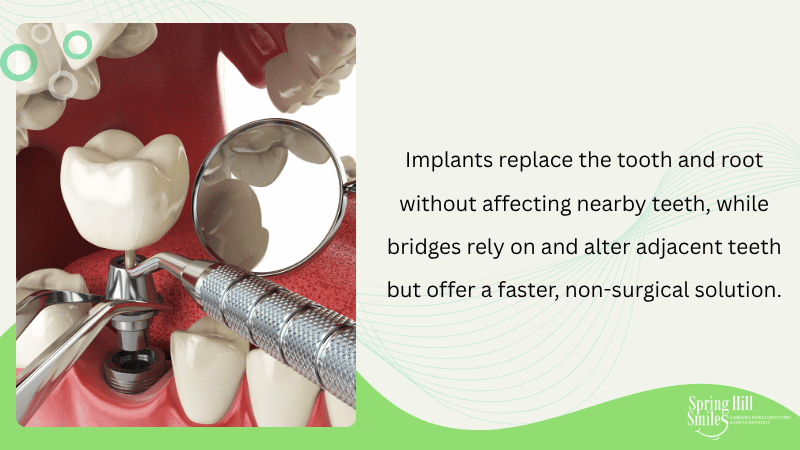
A single implant replaces both the tooth and its root through a titanium post surgically placed into your jawbone. The post bonds with your bone through osseointegration, creating a stable foundation for a crown that looks and functions like your natural tooth.
A dental bridge, on the other hand, uses your adjacent teeth as anchors to support a replacement tooth called a pontic. Your dentist must reshape the teeth on both sides of the gap by removing enamel so crowns can fit over them. This means a 3-unit bridge involves three connected pieces: two crowns and the middle replacement tooth.
Implants are more invasive initially because they require surgery and healing time of two to six months. Bridges are faster to complete, usually taking just two to three weeks with no surgery needed. However, bridges require permanently altering healthy teeth that might not need any work otherwise.
Impact on Adjacent Teeth and Bone Preservation
One major advantage of choosing an implant is that it stands alone without affecting your neighboring teeth. Your healthy teeth remain untouched and continue functioning normally.
Dental bridges require grinding down the adjacent teeth by about 60-70% to create space for the supporting crowns. This removal of healthy tooth structure is permanent and increases the risk of decay or nerve damage in those anchor teeth over time.
Bone preservation is where implants truly shine. When you lose a tooth, the jawbone underneath begins to deteriorate without the stimulation from chewing forces. An implant mimics a natural root and keeps your bone healthy and strong. If your bone has already weakened, you might need bone grafting before implant placement.
With bridges, the bone under the pontic continues to shrink because there's no root to stimulate it. This bone loss can eventually create a visible gap between the bridge and your gums, affecting your appearance.
Longevity and Maintenance Considerations
The implant screw can last a lifetime with proper care, while the crown typically needs replacement after 10 to 15 years. You care for an implant just like your natural teeth through regular brushing and flossing.
Bridges typically last 5 to 7 years before needing replacement. They require extra cleaning steps to remove food and bacteria trapped underneath the pontic using special floss threaders or water flossers.
The initial cost difference is significant. A single implant costs $3,000 to $4,000, while bridges are cheaper upfront. However, when you factor in that bridges need replacement more frequently and can damage anchor teeth requiring additional treatment, implants often provide better long-term value.
Benefits and Risks of Choosing a Dental Implant
Dental implants provide strong, long-lasting tooth replacement that preserves your jawbone and protects surrounding teeth. However, the procedure involves surgery with possible complications that you should understand before making your decision.
Long-Term Durability and Quality of Life
Dental implants can last 25 years or longer with proper care. The implant post fuses with your jawbone through a process called osseointegration, creating a stable foundation that functions like a natural tooth root.
You can eat all your favorite foods without worry. Unlike dentures that slip or bridges that limit what you can chew, implants handle the same biting force as natural teeth.
The dental crown attached to your implant looks and feels natural. Many people choose zirconia implants for their tooth-colored appearance and strength. You won't need to remove your implant for cleaning like dentures.
Your speech remains clear and natural. Implants don't shift or click when you talk, which can happen with other replacement options.
Oral Health Advantages Over Bridges
Implants protect your healthy teeth. Traditional bridges require grinding down the teeth on either side of the gap, which removes healthy enamel permanently.
Bone preservation is a major benefit. When you lose a tooth, your jawbone starts to shrink in that area. The implant post stimulates the bone just like a natural root, preventing bone loss.
Your gums stay healthier around implants. The design allows you to brush and floss normally, unlike bridges where food can get trapped underneath.
Dental implants replace both the tooth and the root, which stops the bone deterioration that occurs with other replacement methods.
Potential Complications and Implant Failure
Implant surgery carries risks like any surgical procedure. Infection at the implant site is the most common complication, though it's usually minor and treatable with antibiotics.
Nerve damage can occur during placement. This may cause numbness or tingling in your lips, chin, or gums, though it's rare.
Implant failure happens when your bone doesn't fuse properly with the metal post. Smoking significantly increases this risk. If the bone fails to integrate, your dentist removes the implant and cleans the area.
You might need a bone graft before getting an implant. If your jawbone is too thin or soft, the bone graft procedure adds months to your treatment timeline and extra cost.
Sinus problems can develop if an upper jaw implant extends into your sinus cavity. Your dentist will evaluate your bone structure carefully to avoid this issue.
Treatment Process and Factors Affecting Success
The implant process involves multiple stages over several months, with bone quality and advanced imaging playing critical roles in achieving long-term success. Understanding each step helps you know what to expect and why certain preparatory procedures may be necessary.
Step-by-Step Overview of the Implant Procedure
Your dental implant surgery begins with careful planning and proceeds through distinct phases. First, your dentist places the implant post, a titanium screw, into your jawbone where the tooth is missing. This surgical step typically takes one to two hours under local anesthesia.
After implant placement, you enter a healing period lasting three to six months. During this time, osseointegration occurs as your bone grows around and fuses with the implant post. This biological process creates the stable foundation your new tooth needs.
Once healing completes, your dentist attaches an abutment to the implant post. This connector piece sits above your gumline and supports the final restoration. You may wear a temporary crown during the weeks it takes to fabricate your permanent crown.
The final step involves placing your custom-made permanent crown. Your dentist ensures proper fit, color match, and bite alignment before securing it to the abutment.
Importance of Bone Health and Grafting Options
Your jawbone density directly impacts implant survival rates and treatment outcomes. When you lose a tooth, the surrounding bone begins deteriorating without the stimulation tooth roots normally provide. Insufficient bone volume means the implant post cannot stabilize properly.
A bone graft adds material to areas with inadequate bone. Your dentist may use your own bone, donated human bone, or synthetic materials. The graft needs several months to integrate before implant surgery can proceed.
Patients missing upper back teeth sometimes need a sinus lift. This procedure raises the sinus floor and adds bone grafting material beneath it, creating enough height for implant placement. While bone grafting extends your treatment timeline and increases costs by $300 to $3,000, it makes implant success possible when you otherwise wouldn't qualify.
Role of Imaging and Digital Planning
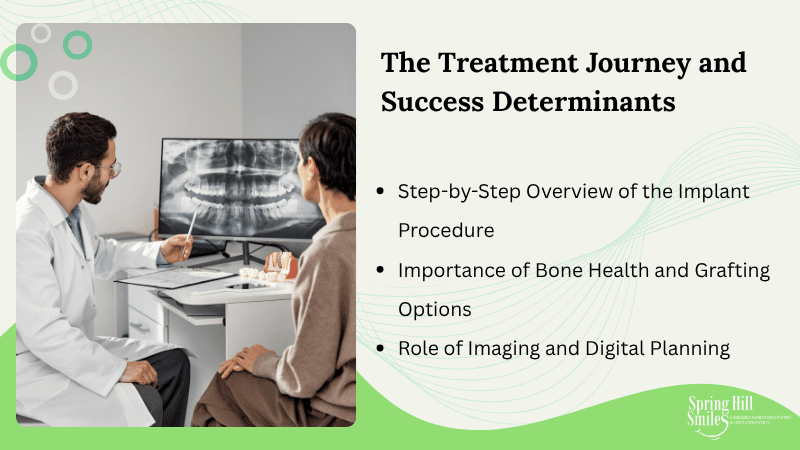
A CBCT scan provides three-dimensional images of your jaw, revealing bone density, nerve locations, and sinus positions. This advanced imaging technology guides safe implant placement and helps avoid complications. Your dentist uses these detailed scans to determine the optimal implant angle, depth, and diameter for your specific anatomy.
Digital planning software allows your dental team to virtually place the implant before surgery. They can identify potential obstacles like the mental nerve in your lower jaw or insufficient bone in specific areas. This technology improves precision and reduces surgical time.
Some practices create surgical guides from your CBCT scan data. These custom templates fit over your teeth during surgery and direct the drill to the exact planned position.
Insurance, Payment Options, and Affordability
Most dental insurance plans provide limited coverage for implants, but multiple financing options can make the procedure more affordable. A single tooth implant typically costs $3,000-$6,000, and understanding payment strategies helps you budget effectively.
Does Insurance Cover Dental Implants?
Most dental insurance plans treat implants as cosmetic procedures, which means coverage is often minimal or nonexistent. When plans do cover implants, they typically pay only 10-50% of the total cost.
Your annual maximum benefit usually caps at $1,000-$2,000, but the cost of dental implants exceeds this amount. Many plans also include waiting periods of 6-12 months before implant coverage begins.
Some insurance may cover parts of the procedure separately. The initial consultation, X-rays, and tooth extraction often receive coverage. The crown portion might qualify as "major restorative" work, which some plans partially cover.
Medical insurance sometimes covers implants if your tooth loss resulted from an accident or medical condition. You'll need detailed documentation and pre-authorization for this type of claim.
Financing and Reducing Out-of-Pocket Expenses
Many dental offices offer in-house payment plans that let you pay 10-20% upfront and spread remaining costs over 12-24 months with 0% interest. Healthcare credit cards like CareCredit provide promotional periods with no interest if paid within 6-24 months.
Health Savings Accounts (HSA) and Flexible Spending Accounts (FSA) let you use pre-tax dollars for implant costs, effectively reducing your expense by 20-30%.
You can split treatment across two calendar years to maximize two years of insurance benefits. Getting multiple quotes from different providers helps you find competitive pricing, as costs can vary 30-40% between practices.
Comparing Upfront Costs to Long-Term Value

A single tooth implant costs $3,000-$6,000 initially, but lasts 25+ years with proper care. Dental bridges cost $1,500-$5,000 upfront but need replacement every 7-15 years, totaling $4,500-$15,000 over 20 years.
Implants preserve your jawbone and don't require grinding down healthy adjacent teeth like bridges do. They function like natural teeth for eating and speaking.
Bridges and dentures require ongoing maintenance costs for replacements, adjustments, and repairs. Implants need only regular dental cleanings and checkups, with minimal additional expenses over their lifetime.
Frequently Asked Questions
Dental implants raise many questions about cost, comfort, and what to expect during the process. Most people want to know about pricing, recovery, and potential problems before making a decision.
How much does it typically cost to replace one missing tooth with a dental implant?
A single tooth dental implant costs around $2,143 on average, but the price can range from $1,646 to $4,157. The final cost depends on several factors.
Your location affects the price because dental care costs more in some cities than others. The complexity of your case matters too, especially if you need extra procedures like bone grafting.
The dentist's experience level and the materials used for your crown also influence the total cost. Some dental offices charge separately for the implant, abutment, and crown, while others bundle everything into one price.
What are some common reasons someone might choose not to get a dental implant?
Smoking makes you a poor candidate for dental implants because it slows healing and increases failure rates. Severe periodontal disease can also prevent you from getting an implant until the gum disease is treated.
Certain health conditions create problems with the implant procedure. Uncontrolled type 2 diabetes, bleeding disorders, and some heart conditions make the surgery riskier.
People taking bisphosphonate drugs for osteoporosis may face complications. Chemotherapy and treatments that affect healing can also make you wait before getting an implant.
Some people simply can't maintain good oral hygiene habits, which are necessary for long-term implant success. The cost is another major reason many people decide against implants.
Do dental implants hurt, and what does the recovery feel like?
You receive local anesthesia to numb the area during the procedure, and many dentists also offer IV sedation. This means you shouldn't feel pain during the actual surgery.
After the numbness wears off, you'll likely experience soreness and swelling at the implant site. Most people manage this discomfort with over-the-counter pain medication or prescriptions from their dentist.
The initial healing takes a few days to a week for the surgical site. However, the bone needs several months to fuse with the titanium implant in a process called osseointegration.
During this healing period, you can usually eat and speak normally, though you may need to avoid very hard foods. Most people return to work within a day or two after the procedure.
How safe are dental implants, and what are the most common risks or complications?
Most dental implant procedures succeed without major problems. The surgery itself is safe when performed by a qualified dental professional.
Possible complications include damage to surrounding teeth during placement and nerve damage in the surrounding area. Injury to the jawbone or sinus tissue can happen, though these issues are rare.
Infection at the implant site is another risk you should know about. Sometimes the implant fails to fuse properly with the surrounding bone, which means it won't stay in place.
Misaligned teeth can occur if the implant isn't placed correctly, which may affect your bite. Your dentist will monitor your healing to catch any problems early.
Are dental implants usually covered by dental insurance, and what affects coverage?
Most dental insurance plans treat implants as a cosmetic procedure and don't cover them fully. Some plans may cover part of the cost, such as the crown portion, but not the implant itself.
Your specific policy determines what you'll pay out of pocket. Plans that do offer coverage often have annual maximum limits that may not cover the full implant cost.
If you lost your tooth due to an accident, your medical insurance might cover some of the replacement cost. The reason for tooth loss can affect whether you get any insurance help.
Some dental discount plans and financing options exist to help spread out the payments. You should check with both your dental and medical insurance before assuming nothing is covered.
What are the downsides or "things people don't tell you" about getting a dental implant?
The entire process takes several months from start to finish, not just a few weeks. You'll need multiple appointments for the implant placement, healing checks, and crown fitting.
You can't speed up the bone fusion process, which means waiting for your jawbone to heal naturally. This extended timeline surprises many people who expect faster results.
The tissue around your implant can still develop periodontal disease just like your natural teeth. You'll need to maintain the same careful oral hygiene routine for the rest of your life.
Some people need bone grafts before getting an implant, which adds extra time and cost to the process. This additional surgery isn't always discussed during initial consultations.
Your dental team may recommend special brushes to clean around the implant depending on your crown design. These extra care steps require ongoing commitment and sometimes additional expense.
.png)
.png)





.svg)
.webp)