
.svg)
.svg)


.png)

Crowded teeth can make you feel self-conscious about your smile and create challenges when brushing and flossing.
Many people assume that fixing this problem means having teeth pulled, but that's not always the case. Invisalign for crowded teeth without extraction is helpful when the crowding is mild to moderate.
The clear aligners work by gently shifting your teeth into better positions and sometimes expanding your dental arch slightly to create more space. This orthodontic treatment offers a way to straighten your smile without the need for metal braces or removing healthy teeth. Whether you're a good candidate depends on how severe your crowding is and other factors specific to your mouth.
Understanding your options can help you make the right choice for your smile. We'll walk you through how Invisalign works for crowded teeth, when extractions might still be needed, and what you can expect from the treatment process.
Key Takeaways
- Invisalign can successfully treat mild to moderate crowding without removing teeth by expanding the dental arch and repositioning teeth
- The severity of your crowding and jaw size will determine if you need extractions or can use aligners alone
- Invisalign offers a comfortable and discreet alternative to traditional braces for most crowding cases
Understanding Dental Crowding
Dental crowding occurs when your teeth don't have enough space in your jaw to align properly. The severity of your crowding and what caused it will determine which treatment options work best for you.
Types and Levels of Crowding
Orthodontists classify tooth crowding into three main categories based on severity. Each level requires different treatment approaches.
Mild crowding affects 1-3mm of space in your mouth. You might notice slight overlapping or minor rotation of one or two teeth. Your bite usually functions normally, and mild or moderate teeth crowding often involves just slight misalignment.
Moderate crowding involves 4-6mm of missing space. Several of your teeth may overlap or twist noticeably. You'll see more obvious misalignment, especially in your front teeth.
Severe crowding means you're missing 7mm or more of space. Multiple teeth overlap significantly, and some may even sit behind or in front of others. This level of crowding severity often affects your bite and makes cleaning difficult.
Causes of Teeth Crowding
Several factors lead to dental crowding, with genetics playing the biggest role. You might have inherited a jaw that's too small for your teeth or teeth that are too large for your jaw.
Your childhood habits also matter. Using a pacifier after age three, prolonged bottle use, or extended thumb sucking can push your teeth out of alignment.
Sometimes baby teeth fall out too early or too late, causing permanent teeth to erupt improperly. Extra teeth, poorly-fitted dental crowns, or conditions like cleft palate can also cause crowding.
Risks and Oral Health Implications
Crowded teeth create more than cosmetic concerns. The overlapping surfaces trap food and bacteria where your toothbrush and floss can't reach easily.
This makes oral hygiene challenging and increases your risk of cavities and gum disease. Teeth crowding can affect your oral health by making proper cleaning nearly impossible in some areas.
Your crowded teeth may rub against each other constantly, causing premature wear. The misalignment can stress your jaw muscles, leading to neck and shoulder pain. Some people develop TMJ disorders with jaw tenderness and pain while chewing.
How Invisalign Treats Crowded Teeth
Invisalign uses advanced digital technology to create a customized treatment plan that gradually shifts your crowded teeth into their proper positions. The process involves precise scanning, custom aligner fabrication, and strategic attachments to guide your teeth movement.
Digital Scanning and Treatment Planning
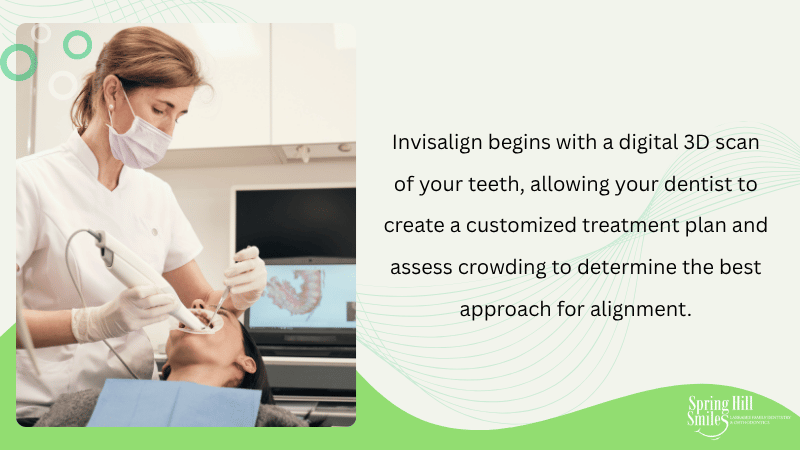
Your Invisalign journey starts with a digital scan of your teeth. Your dentist uses advanced 3D imaging technology to capture every detail of your mouth without messy impressions.
This scan creates a virtual model that shows exactly how your teeth are positioned. Your dentist uses software called ClinCheck to design your customized treatment plan. You can see a preview of how your teeth will move at each stage.
The digital scan allows your dentist to measure the exact amount of crowding you have. They can plan how much space needs to be created and whether arch expansion can fix your crowding without extractions.
Role of Removable Aligners and Attachments
Your clear aligners are removable trays that fit snugly over your teeth. Each set of Invisalign aligners applies gentle pressure to move your teeth slightly.
Small tooth-colored attachments may be bonded to certain teeth. These bumps give the aligner trays better grip and control. Attachments help rotate teeth or move them in specific directions that would be difficult with aligners alone.
You wear each set of removable aligners for about one to two weeks. The aligners work 20-22 hours per day to shift your crowded teeth. You only remove them to eat, drink, brush, and floss.
Step-by-Step Aligner Fabrication and Wear
Your aligner fabrication happens at an Invisalign lab using your digital treatment plan. Each aligner tray is custom-made from clear plastic material. The series of aligners is numbered in the exact order you'll wear them.
You'll receive several sets of Invisalign aligners at once. You switch to the next aligner in the series every week or two as directed by your dentist. Each new aligner continues moving your teeth closer to their final position.
Treatment time ranges from 6-18 months depending on how crowded your teeth are. You'll visit your dentist every 6-8 weeks to monitor your progress and receive your next sets of aligners.
Non-Extraction Solutions for Crowding
Invisalign can address crowded teeth through three main space-creation methods: expanding the dental arch to add room, carefully removing small amounts of enamel between teeth, and combining these techniques for optimal results.
Arch Expansion as a Space Creation Method
Arch expansion creates additional space by widening your dental arch, either at the front through controlled tooth movement or at the back by adjusting your premolars. This technique works particularly well for mild to moderate cases.
Your orthodontist can predictably achieve up to 2mm of expansion per quadrant when your gum and bone conditions are healthy. The process happens gradually as you wear your aligners, gently shifting teeth outward to create room.
Your gum thickness plays a big role in how much expansion is safe. Thicker gums allow for more flexibility in treatment, while thinner gums require a more conservative approach to prevent recession.
Key factors for successful expansion:
- Healthy periodontal tissues
- Appropriate gingival biotype
- Proper treatment planning
- Patient compliance with wear time
Interproximal Reduction (IPR)
IPR involves removing tiny amounts of enamel between your teeth to create space. Your orthodontist can safely remove up to 0.3mm per contact in the front teeth and up to 0.5mm in the back teeth while keeping your enamel healthy and protected.
This technique helps fix crowded teeth without extraction by generating the extra room needed for alignment. The removed enamel is minimal and doesn't harm your tooth structure or increase cavity risk.
IPR also improves the shape of contacts between teeth and can reduce those dark triangular spaces that sometimes appear near the gums. Your orthodontist performs this procedure at specific stages during your treatment based on your personalized plan.
Fixing Crowded Teeth Without Extraction
Treating crowded teeth without extractions combines arch expansion and IPR to create enough space for proper alignment. Most mild to moderate crowding cases can be successfully resolved using these methods together.
Your treatment timeline typically ranges from 6 to 18 months depending on crowding severity. Success depends on several factors including your age, bite pattern, and bone structure.
For cases with severe crowding beyond 8mm, extraction might still be necessary. Your orthodontist will use 3D scans and digital planning tools to determine if non-extraction treatment will work for your specific situation.
You'll need to wear your aligners 20 to 22 hours daily and attend checkups every six to eight weeks so your orthodontist can monitor progress and make adjustments as needed.
Evaluating Suitability and Treatment Outcomes
Your treatment success depends on how crowded your teeth are and your specific dental needs. Most people with mild to moderate crowding see excellent results, while severe cases need careful evaluation to determine if extractions are necessary.
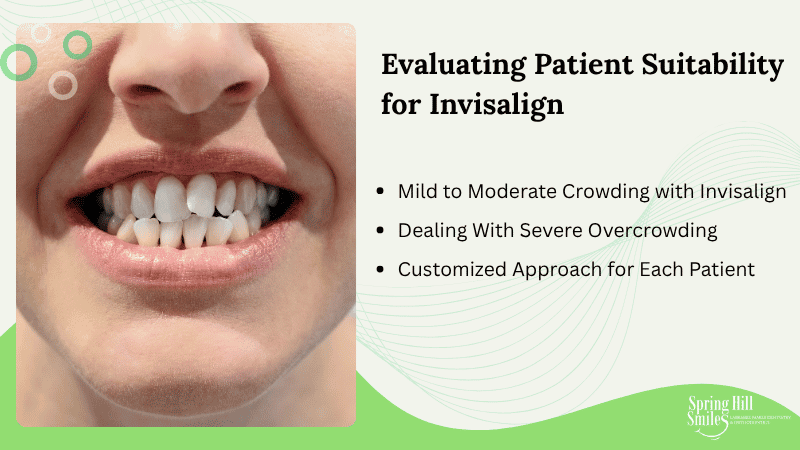
Mild to Moderate Crowding with Invisalign
Invisalign can fix mild to moderate crowding in most cases without removing any teeth. Your orthodontist uses techniques like interproximal reduction (IPR) to create space between teeth by gently reshaping the enamel. This process removes tiny amounts of enamel to help teeth shift into proper alignment.
Your treatment time typically ranges from 6 to 18 months depending on crowding severity. You'll need to wear your aligners for 20 to 22 hours each day to achieve the best results.
The aligners gradually move your teeth into better positions while improving your bite alignment. You can remove them for eating and cleaning, which makes maintaining oral hygiene easier than with traditional braces.
Dealing With Severe Overcrowding
Severe overcrowding cases may still work with Invisalign, but your orthodontist needs to carefully assess whether extractions are necessary. When your jaw doesn't have enough space for all your teeth, creating room through IPR alone might not be sufficient.
Your doctor will evaluate factors like your jaw size, tooth size, and bone structure. Some severe cases benefit from combining Invisalign with other orthodontic treatment methods or tooth removal to achieve stable, long-term results.
Without proper spacing, you risk relapse after treatment ends. Your teeth may shift back toward their original crowded positions if there isn't adequate room to maintain the new alignment.
Customized Approach for Each Patient
Your treatment plan gets designed specifically for your dental situation. An experienced Invisalign doctor will discuss what's causing your crowded teeth and create a personalized approach based on digital scans and X-rays.
Key factors in your treatment plan include:
- Current spacing and overlap between teeth
- Jaw size and bone density
- Your age and growth patterns
- Goals for your final smile
- Risk factors for relapse
Your orthodontist monitors your progress throughout treatment and makes adjustments as needed. Regular check-ins help ensure your teeth are moving as planned and your bite alignment is improving properly.
Comparing Invisalign With Other Orthodontic Options
When deciding how to fix crowded teeth, you'll want to understand how Invisalign stacks up against traditional braces and when extractions become part of the treatment plan. Your choice affects everything from how you clean your teeth to how comfortable you feel in social situations.
Invisalign Versus Traditional Braces
Both Invisalign and traditional braces work by applying steady pressure to move your teeth into better positions. Metal braces use brackets and wires that stay attached to your teeth throughout treatment. Invisalign uses clear plastic trays that you can remove when eating or brushing.
Traditional braces can handle nearly any orthodontic problem, including complex bite issues and severe crowding. Metal braces give your orthodontist precise control over tooth movement in all directions.
Invisalign works well for mild to moderate crowding cases. The clear aligners are less noticeable than metal braces, which many adults prefer. You'll switch to a new set of aligners every one to two weeks as your teeth gradually shift.
The choice often comes down to your specific case and lifestyle needs. Your orthodontist will evaluate your crowding severity and recommend which orthodontic treatment gives you the best results.
When Tooth Extractions Are Necessary
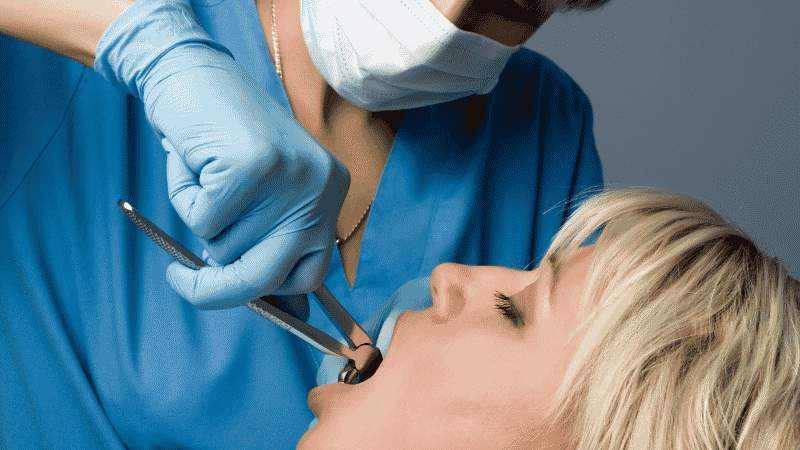
Sometimes your jaw simply doesn't have enough room for all your teeth, no matter which treatment you choose. In these cases, tooth extraction creates the space needed for proper alignment.
Your orthodontist determines if extractions are necessary based on your crowding severity and jaw size. Severe crowding often requires removing one or more teeth before starting treatment. This applies to both Invisalign and traditional braces.
Mild to moderate crowding can often be treated without extractions. Your orthodontist might create space by expanding your dental arch or filing small amounts between teeth instead.
The decision about extractions happens during your initial consultation. Your orthodontist will take X-rays and measurements to determine if your teeth can fit properly without removing any.
Impact on Oral Hygiene and Lifestyle
Your ability to maintain good oral hygiene differs significantly between these two options. With Invisalign, you remove the aligners to brush and floss normally. This makes cleaning your teeth much easier than with fixed braces.
Metal braces require special tools and techniques for oral hygiene. You'll need to brush around brackets and use floss threaders to clean between teeth. Food particles can get trapped in the wires and brackets more easily.
Invisalign lets you eat whatever you want since you take the aligners out during meals. Traditional braces come with food restrictions to avoid breaking brackets or bending wires. You'll need to avoid sticky, hard, or crunchy foods.
The clear aligners are less noticeable in social and professional settings. You can remove them for important photos or events, though you need to wear them 20-22 hours daily for best results.
Frequently Asked Questions
Many people have questions about how Invisalign works for crowded teeth, especially regarding treatment methods, timelines, and costs. Here are answers to common concerns about using clear aligners to fix crowding.
How does Invisalign create space to straighten crowded teeth without removing any teeth?
Invisalign creates space through several techniques that don't require extractions. The aligners can gradually widen your dental arch, which gives your teeth more room to align properly.
Your orthodontist may also use a technique called interproximal reduction, or IPR. This involves carefully removing tiny amounts of enamel between teeth to create the space needed for alignment.
The aligners can also move your teeth slightly forward or backward in your jaw. This repositioning creates additional space for crowded teeth to shift into proper alignment.
How long does Invisalign usually take to improve moderate to severe crowding?
Treatment time for moderate crowding typically ranges from 12 to 18 months. Your specific timeline depends on how much crowding you have and how well you follow your treatment plan.
Severe crowding cases may take 18 to 24 months or longer to complete. Treatment time for crowding can vary from 6 to 18 months depending on severity and how consistently you wear your aligners.
You'll need to wear your aligners for 20 to 22 hours daily to stay on track with your treatment timeline.
What results can I expect from Invisalign for crowded teeth, and when will changes be noticeable?
You can expect straighter, more evenly spaced teeth as your primary result. Your bite should also improve, making chewing more comfortable and reducing strain on your jaw.
Most people notice changes within the first few months of treatment. You'll see gradual improvements as you switch to each new set of aligners every one to two weeks.
Your teeth will become easier to clean as they straighten. This reduces your risk of cavities and gum disease that often develops with crowded teeth.
How much does Invisalign typically cost for crowded teeth, and is around $6,000 considered normal?
Invisalign for crowded teeth typically costs between $3,000 and $8,000. A price around $6,000 falls within the normal range for moderate crowding cases.
Your final cost depends on how severe your crowding is and how long treatment takes. More complex cases requiring longer treatment will cost more than mild crowding.
Many dental insurance plans cover part of Invisalign treatment. Your orthodontist can also offer payment plans to make treatment more affordable.
Can Invisalign fix lower front teeth crowding, and are there special considerations for that area?
Yes, Invisalign can effectively fix bottom teeth crowding in the lower front area. This is actually one of the most common types of crowding that people seek treatment for.
Lower front teeth require careful planning because the jawbone in this area is thinner. Your orthodontist may need to use IPR or slight arch expansion to create space safely.
The lower front teeth tend to shift more easily than other teeth. This means you'll need to wear your retainer consistently after treatment to maintain your results.
What is the "30-minute rule" with Invisalign, and does it affect treatment success for crowding?
The 30-minute rule refers to keeping your aligners out for no more than 30 minutes at a time when eating or cleaning. Following this guideline helps you reach the recommended 20 to 22 hours of daily wear.
Consistent wear is critical for treating crowded teeth successfully. When you don't wear your aligners enough, your teeth won't move according to plan and treatment takes longer.
You can remove your aligners for meals and oral hygiene, but put them back in as soon as possible. Setting phone reminders can help you stay on track with the 30-minute rule.
.png)
.png)





.svg)
.webp)